
It’s a beautiful fall day at the Pueblo Community College campus in Cañon City. In a small courtyard, a slight breeze rustles the tree leaves under a clear blue Colorado sky.
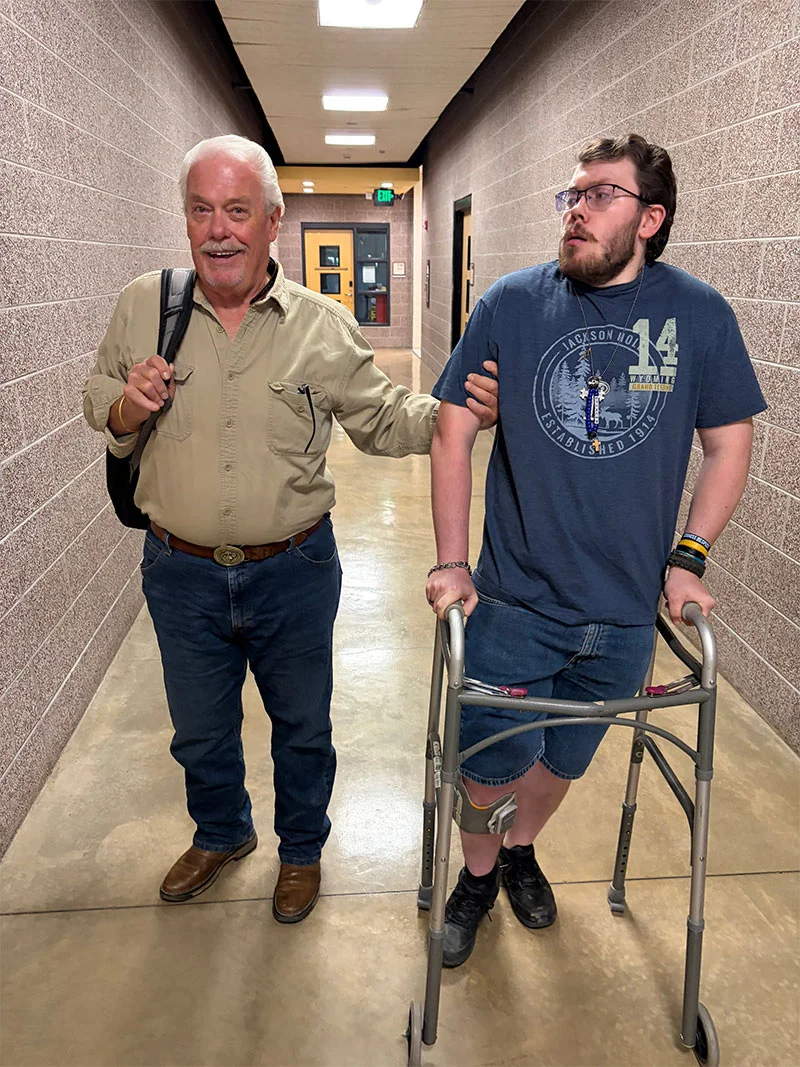
Inside, Spencer Dray, 32, navigates his walker down a hallway to class. He walks slowly and haltingly, the result of a traumatic brain injury he suffered in a car accident more than a decade ago.
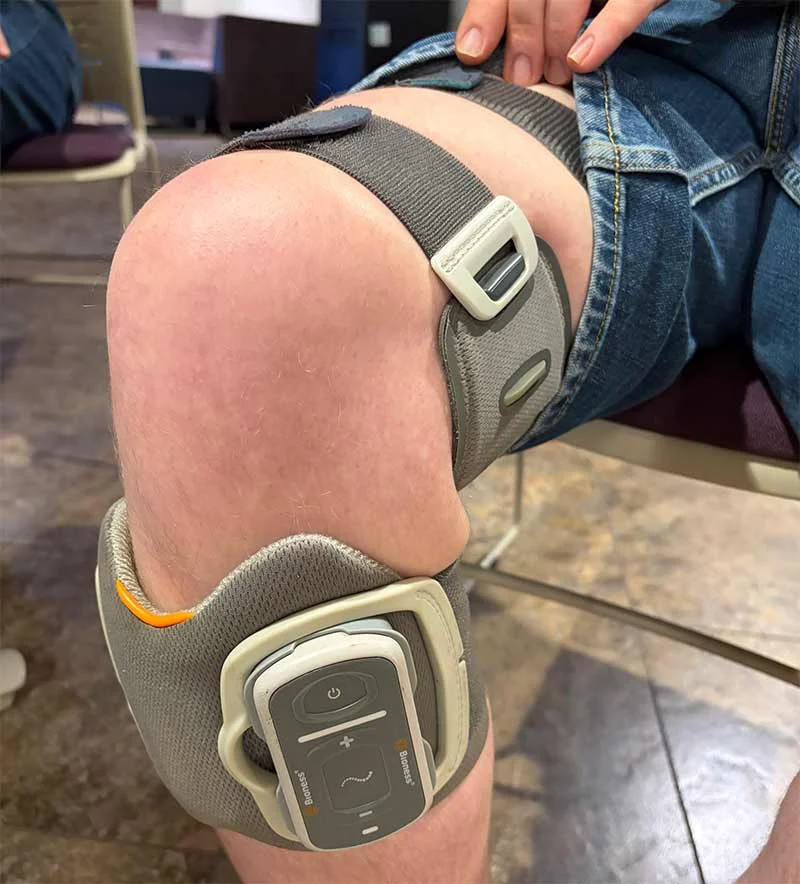
On his right leg, Spencer wears a device that sends electrical impulses to his muscles, helping him lift his foot as he walks. His father, Larry, holds Spencer’s upper arm, walking beside him and helping him maintain his balance.
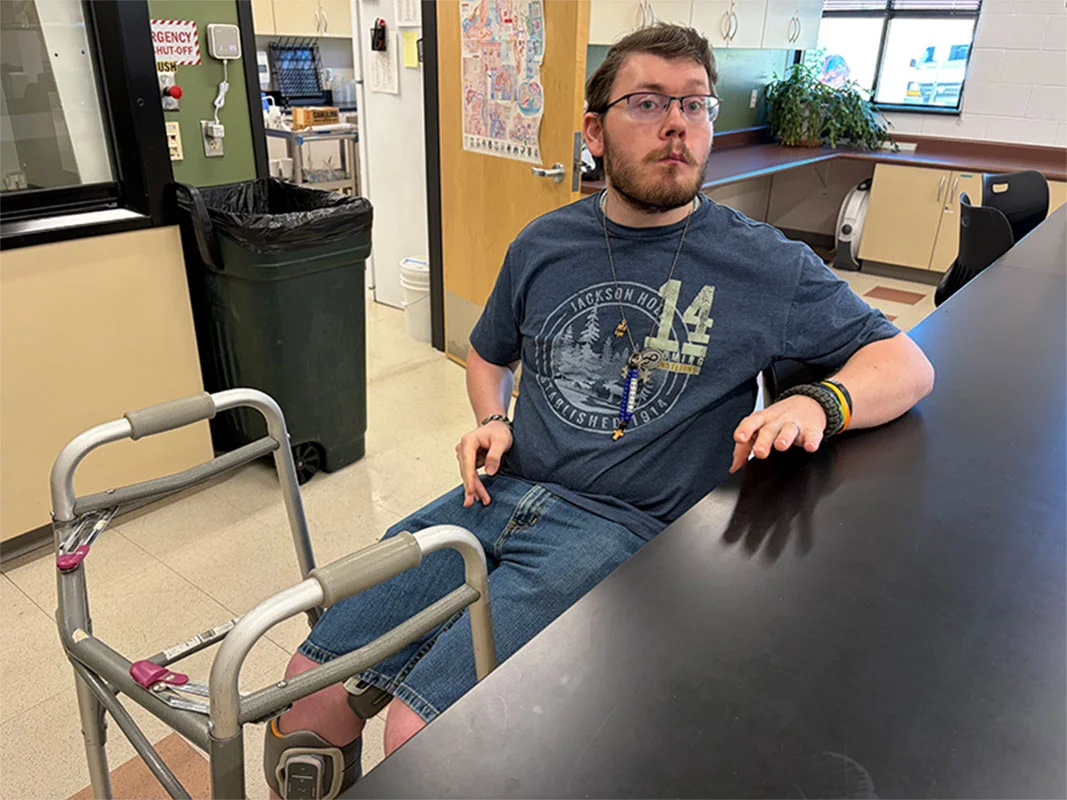
At the classroom door, Spencer makes a turn, heads inside, chooses his seat, grabs his backpack and pulls out his laptop computer. He’s ready for his nutrition class.
That Spencer is walking and attending college today is thanks to his unceasing efforts to recover from the accident, the support of his parents, Larry and Sheran Dray, and the care he receives from Dr. Melissa Strike, a UCHealth physical medicine and rehabilitation doctor in Colorado Springs.
“She is an amazing doctor,” Spencer said. “She goes above and beyond.”
Attending class at Pueblo Community College is yet another step in his long recovery process from the accident. Doctors at the time told his parents that patients with traumatic brain injuries make their most significant recovery within a year, then hit a plateau.
Larry and Sheran refused to believe that prognosis and pursued a variety of therapies for Spencer in the years after the accident. When Spencer began seeing Dr. Strike in 2023, they found in her a partner who is equally committed to helping Spencer. To this day, Spencer attends multiple therapy sessions weekly, and at home, Larry and Sheran have cleverly integrated exercise and therapy into Spencer’s everyday activities. Their quest to help Spencer continue to recover knows no bounds.
“As long as we have Dr. Strike, who guides, motivates, finds opportunities and continues to positively say that Spencer can move forward, we can navigate any obstacles,” Larry said. “She says ‘We are still opening doors’ in his recovery.”
A life-changing crash and a family’s commitment
Before the accident, Spencer was working at McDonald’s and a telemarketing call center. He had recently graduated from high school in Bath, Ohio, where he played alto and tenor saxophone with the marching band for four years, earning first place at the state competition his senior year. He loved hanging out with friends.
One evening in May 2014, he drove too fast through a curve on his way home. His car plowed into a guardrail, which shattered the windshield and grazed his ear. Had the guardrail been a few centimeters to the right, it would have pierced his head. The car then struck three trees before stopping short of a ravine. The force of the impact shook Spencer’s brain against his skull, causing a skull fracture and bleeding in the brain.
“He was in really bad shape,” Larry said. “The doctors did not think he was going to make it.”
After the accident, Spencer was in a coma for three months. Nurses showed Larry and Sheran how to move Spencer’s limbs to maintain his range of motion and keep his joints and muscles moving. As doctors weaned him off the ventilator, Larry and Sheran didn’t know what sort of brain function he had. He couldn’t speak, and he could barely move.
After time in a nursing home and a rehabilitation facility, Larry and Sheran took Spencer home and began a routine of various physical, occupational, speech and other types of therapies in Ohio.
In 2020, the family moved to Wetmore, Colorado, an unincorporated community of about 500 people 30 miles west of Pueblo. It was a homecoming of sorts for Sheran, who grew up in northern Colorado. She and Larry met while working at a technology firm. They have been married 43 years.
Larry retired early from his job in Ohio to care for Spencer. He jokingly calls himself Spencer’s taxi service, driving him to appointments, weekly therapy sessions in Colorado Springs and Cañon City and to class at the community college. Sheran, who taught mathematics at the University of Oklahoma before retiring, manages the insurance paperwork and calendar for Spencer’s care. They both help Spencer with physical therapy and at-home exercise, based on the therapists’ recommendations.
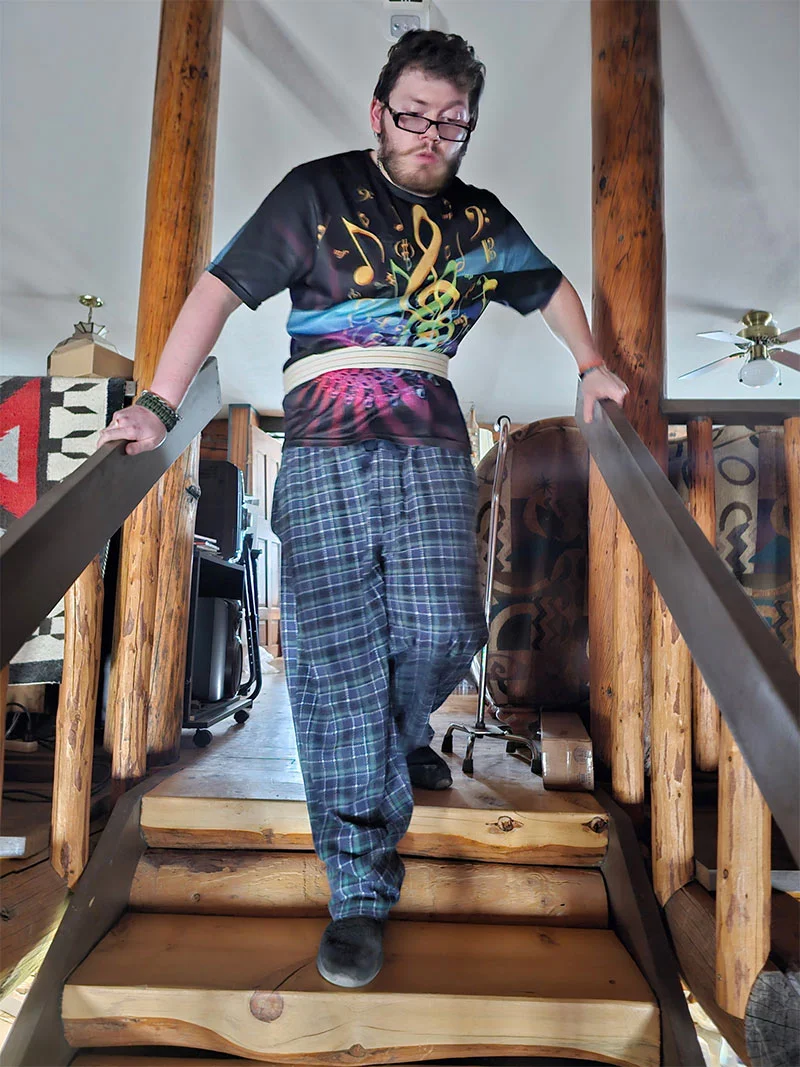
Spencer’s traumatic brain injury affects him in several ways. He has right spastic hemiplegia, where the right side of his body is both weak and spastic. His brain processes information more slowly, so he needs more time to complete tasks such as talking or moving. His speech is difficult to understand, though his sense of humor always shines through, and he sometimes takes a while to form his thoughts. His movement is halting and sometimes uncoordinated, and he has difficulty with balance.
Helping patients with brain injuries caused by accidents, stroke, spinal injury, cerebral palsy and other conditions is Strike’s specialty. She brings the same drive, commitment and ambition to recovery as Spencer and his parents.
‘Let’s turn another page:’ Traumatic brain injury recovery continues
Strike focuses on helping people regain function after illness or injury. It’s rarely a quick process. She sees some patients for years.
Sheran describes Strike as the conductor of an orchestra. Strike takes a multidisciplinary approach, providing treatments in her office, referring Spencer to other specialists and therapists and suggesting devices and technologies that help with the physical aspects of his brain injury. She also works with insurance companies to coordinate and approve care.
Larry said Strike is as motivated as Spencer is, and a “true partner” in his care and recovery.
“Every time we see her, she says ‘Let’s turn another page’ on his recovery,” Larry said.
Researchers increasingly focus on the concept of neuroplasticity, or the brain’s capacity to modify its function and structure after an injury or illness.
Recovery typically slows over time, and most people don’t ever fully recover from traumatic brain injury. But therapies, exercise, rehabilitation, ongoing support and the right adaptive devices can help patients continue to regain skills and make meaningful improvements in their quality of life.
Inspired by her nephew, doctor finds purpose in rehabilitation medicine
Strike’s passion for rehabilitation medicine began long before she became a doctor. When she was 13, her nephew was born with complex medical needs related to a rare mitochondrial disorder. Watching and supporting his medical journey helped her understand the challenges families face while navigating medical care and the profound difference that compassionate physicians and effective therapies can make.

“Growing up with my nephew gave me a unique perspective on what patients and families experience,” Strike said. “It taught me that good medical care is about more than treating a diagnosis. It is about understanding the person, recognizing what matters most to them and helping them achieve the best possible quality of life.”
Strike specializes in neurological rehabilitation. Her expertise includes managing spasticity, or muscle stiffness, with treatments such as Botox injections and intrathecal baclofen pumps, which are surgically implanted devices that deliver muscle relaxant directly into spinal fluid. She has a particular interest in helping young adults who received a neurological diagnosis as a child transition to adult medical care.
Strike attended Kenyon College in Ohio, where she played varsity soccer and lacrosse and served as captain of the women’s lacrosse team. She majored in physics with a concentration in neuroscience, then attended the New York Institute of Technology College of Osteopathic Medicine. She said she chose osteopathy in part because it emphasizes hands-on treatment for patients as well as a holistic approach to patient care. She traveled to India twice and learned about ayurvedic medicine and acupuncture and became a licensed acupuncturist.
In 2009, Strike graduated with her doctor of osteopathic medicine degree, then completed her residency at Shirley Ryan AbilityLab, a leader in rehabilitation medicine. She worked for about six years in St. Louis, where she created nationally accredited spinal cord injury and amputee rehabilitation programs, before moving to Colorado.
Strike said one of the most rewarding aspects of rehabilitation medicine is the opportunity to build lifelong relationships with patients and their families. Rather than focusing solely on a particular impairment, she works to understand each patient’s goals.
Strike’s patients arrive at her office with a variety of conditions and hope for improvement. One patient who suffered from debilitating migraine headaches was able to get off opioid medications thanks to Strike’s treatment. Other patients have returned to their passions for quilting, traveling and even ballroom dancing, she said.
“I’m very relationship driven, I always have been,” she said. “I love getting to know my patients and their families, understanding what makes them tick and finding creative ways to help them reach their goals. Sometimes progress comes in small steps over many years, but those steps can make an enormous difference in someone’s life.”
Outside of medicine, Strike is an avid soccer enthusiast who coaches youth soccer and develops athlete-training programs for girls and women. She also enjoys spending time with her husband and three children, hiking, skiing and traveling.
Rehabilitation focuses on helping patients regain function and independence
A provider at Craig Hospital in Englewood, where Spencer received care, referred him to Strike.
“Spencer is a wonderful example of why I love rehabilitation medicine,” Strike said. “His determination is extraordinary, and he continues to show us that meaningful progress is possible even many years after a brain injury.
“When I first met Spencer, much of our focus was on improving his mobility and independence. Today, he is walking, attending college and pursuing his dreams. Our goal has never been simply to improve how he moves but to help him do the things that matter most to him. What inspires me most is that Spencer isn’t finished setting goals. Every milestone opens another door, and I am excited to see where his determination takes him next. It has been a privilege to be part of his journey.”
The Drays praise Strike for her expertise, creativity and her willingness to advocate for whatever he needs.
“Spencer is very strong-willed, and I think she is too,” Sheran said.
Strike treats Spencer’s leg with Botox to help relax the muscles. Never one to miss a chance to make a joke, Spencer sometimes asks if she can use any leftover Botox on his face.
Strike also makes sure Spencer uses appropriate medical equipment. For example, she recently watched how Spencer walked using a four-wheeled walker and recommended he switch to one with two wheels for more stability.
Getting out of his wheelchair was a long-time goal that Strike helped make possible, Spencer and his parents said.
“I’m very pleased to be walking everywhere,” he said. “It is much more freeing.”
Strike also provides referrals to providers who specialize in the type of speech, physical, occupational and balance therapies he needs.
Strike said she particularly enjoys Spencer’s keen sense of humor. But she knows that caring for someone with a traumatic brain injury is a family affair, so she works closely with his parents, too.
“Aside from being extremely brilliant, Dr. Strike is also very competent and incredibly compassionate,” Larry said.
Pursuing his dream, one class at a time
Spencer said improvements in his walking and speaking helped him decide to enroll in college.
He chose Pueblo Community College because it offers a four-year nursing degree program and because it has campuses within about a 30-minute drive, in Cañon City and Pueblo. He said he always enrolls in in-person classes because it’s important to be on campus with other students and faculty members and to participate in class. He takes one class each semester.
His goal is to earn a nursing degree and work in a hospital or doctor’s office.
“I want to give back to all the people who have done so much for me,” he said.
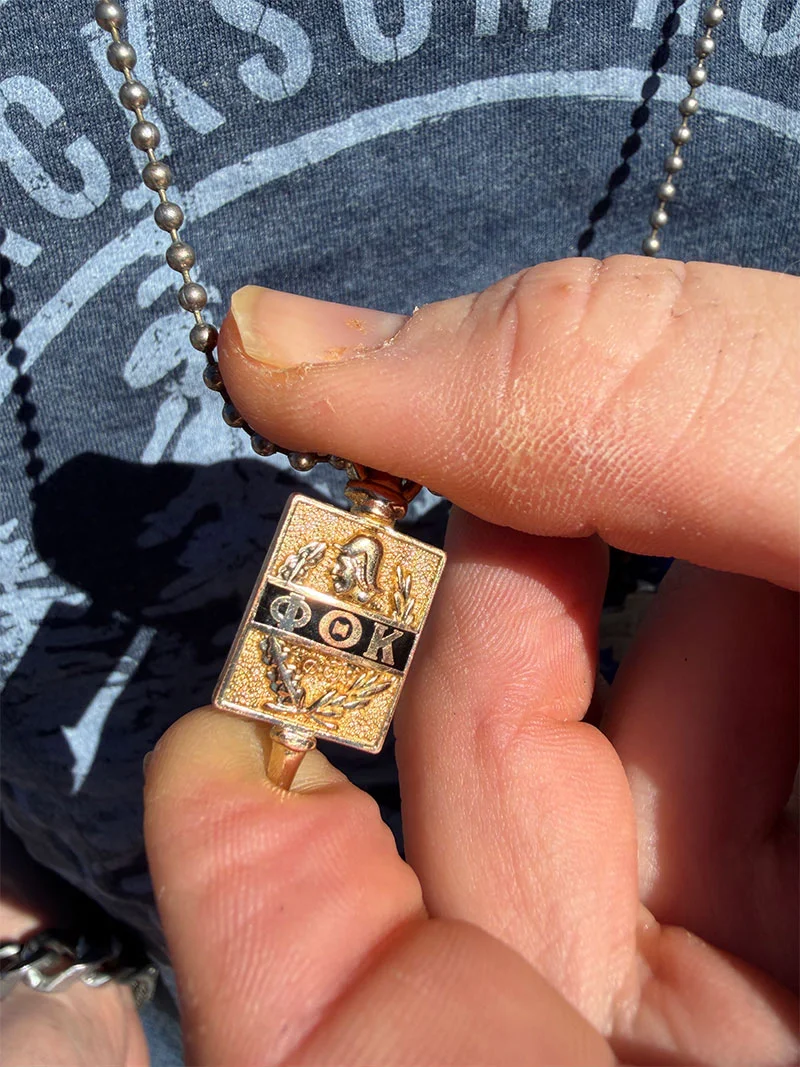
Because of his brain injury, he typically requires additional time to complete his work. Spencer maintains a 3.5 grade point average and is a member of Phi Theta Kappa, a national academic honor society. He wears the society’s charm on a chain around his neck, along with a cross that symbolizes his faith.
Spencer said Strike helps to make college a possibility.
“All of the work I’ve done with her has helped with school,” Spencer said.
No finish line for traumatic brain injury recovery
In the early days after the accident, Larry and Sheran made Spencer’s exercises and therapy activities a more formal affair at home. In recent years, though, they have found ways to integrate that work into everything Spencer does. Every activity stimulates Spencer’s brain and helps his recovery, Larry said.
At home, Spencer loves to play cards and dominoes. He makes cookies and other treats with his mother and recently helped his father refinish their patio furniture. He fixes his own coffee and toast in the morning. Some days, he and Larry take Spencer’s three-wheeled bike out for a spin.
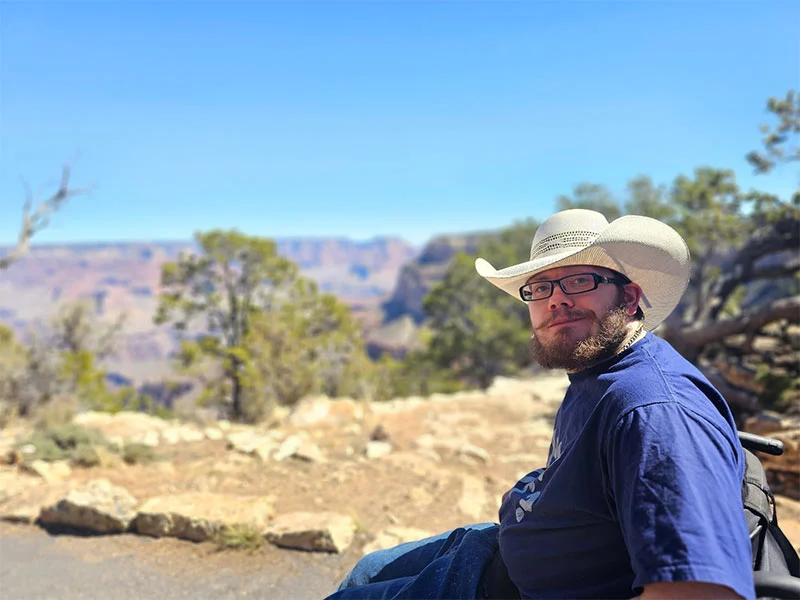
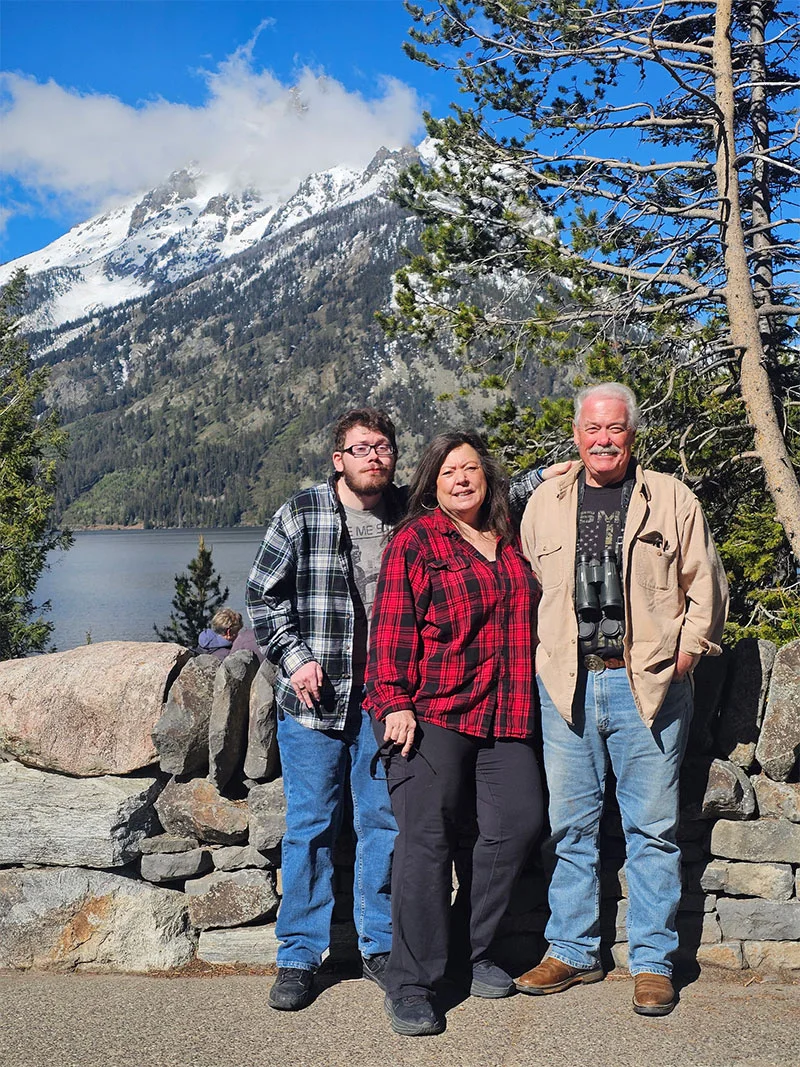
The family travels widely, visiting Grand Canyon and Yellowstone national parks and Taos, New Mexico, in recent years. Every time they stop to see a sight, Spencer gets out of the car, too.
Larry and Spencer are on the road three or four times each week, driving to therapy sessions, appointments and class. Spencer brings along his breathing device and practices breathing exercises in the car.
In the grocery store, Spencer checks the grocery list and pulls items into the cart.
Meanwhile, Larry and Sheran continually research the latest findings in brain injury recovery and bring their ideas and suggestions for Spencer to Dr. Strike.
“This is our mission,” Larry said. “This is our focus. You don’t quit.”
Their next goal is to get Spencer a four-wheeled off-road scooter so he can travel more easily on uneven, rough surfaces, like trails.
Someday, Spencer hopes to be a public speaker. He wants to share his experiences recovering from a brain injury – and his message of hope.
“If you can’t tell, I’m ridiculously happy because I am so well taken care of by them,” he said, gesturing toward his parents.