
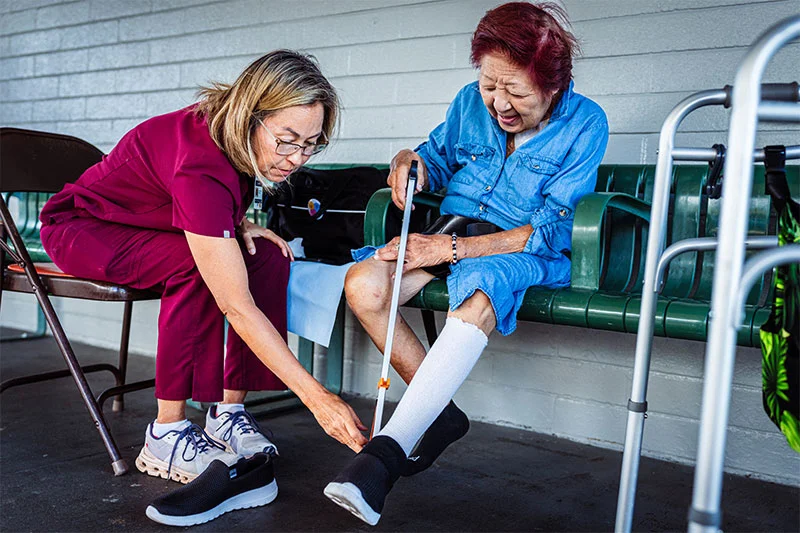
Adaptive devices can help people live longer on their own and stay safer while doing so.
“When we think of someone being independent, we think of them being able to do their daily activities,” said Joe Mooney, an occupational therapist with UCHealth SportsMed Clinic in Steamboat Springs. “For many people who are older or have some physical limitations, adaptive devices allow them to age in place in their home, and perhaps more importantly, do it in the safest way possible.”
What are adaptive devices?
Adaptive devices, also called adaptive equipment or daily living aids, help people complete everyday living activities such as dressing, bathing, eating and preparing meals.
Mooney said good examples are devices that help someone put on their socks and shoes. Without them, a person would be at a greater risk of falling in their home, perhaps breaking a hip, which may land them in the hospital and then in a rehab center.
He said adaptive devices can help with taking daily medication, grooming activities, cooking a meal, cleaning a home and managing activities.
“Using this type equipment gives people a sense of autonomy and confidence,” said Mooney. “Perhaps you can’t drive anymore, but you can get yourself dressed, showered and make a meal. That’s huge for someone’s independence and feeling of self-worth.”
Daily living aids that can help older adults stay independent
Here are the most common adaptive devices and how they can assist people in everyday tasks.
Dressing aids:
- Sock aids provide a molded frame with long handles that help hold the sock open while you slide your foot into it, reducing the need to bend over or stretch.
- Shoehorns with long handles help slip your foot into your shoes.
- Reachers allow you to pinch the waistband of pants and pull them up over your feet.
Eating and meal preparation aids
- Rocker knives are adaptive knives that cut food with a rocker-type action. They are helpful for people who may have arthritis or a weak hand grip. They require less fine motor control as you rock your whole hand to cut food, as opposed to making more precise cuts.
- Adaptive utensils have a thicker grip, which makes them easier to hold. The utensils also can bend so that people who lack range of motion can more easily bring food to their mouth.
- Foam tubing can be wrapped around items such as a toothbrush, brush or pencil to make them easier to hold.
Bathing and showering safety equipment
- A long-handled sponge can reach the back or the feet, allowing a person to clean themselves without needing help from someone.
- Shower chairs or stools.
- A tub transfer bench hangs over the wall of a tub so you can sit on the bench and transition into the tub.
- Hand-held shower wands.
- Grab bars in a walk-in shower or tub, as opposed to bars installed via suction cups since those are not as stable.
Mooney reminds people to sit whenever possible on a stool or bench.
“Standing up in the shower for people who have problems with balance has a lot of risks as it’s so slippery,” he said.
Where can you find adaptive devices?
If you are interested in adaptive devices for yourself or a friend or family member, Mooney suggests talking with a primary care provider or having a consultation with an occupational therapist who can create an individualized plan for completing everyday tasks.
“It can be pretty empowering because there are a lot of devices that can help people live independently,” he said. “We have an aging country, and now more than ever, it’s important to help people to stay in their home and age in place safely.”